Exploring the 4D Coxeter Bead Model for 3D Printing in Mathematical Jewelry Design
Understanding the 4D Coxeter Bead Model
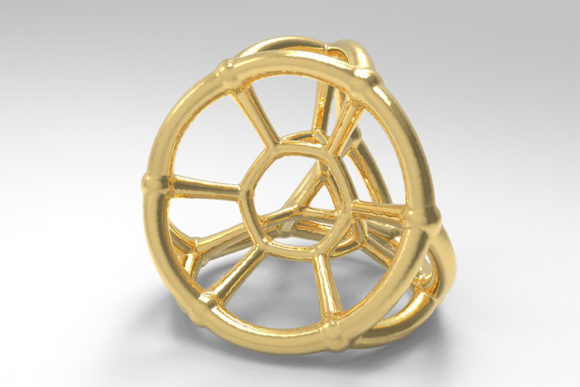
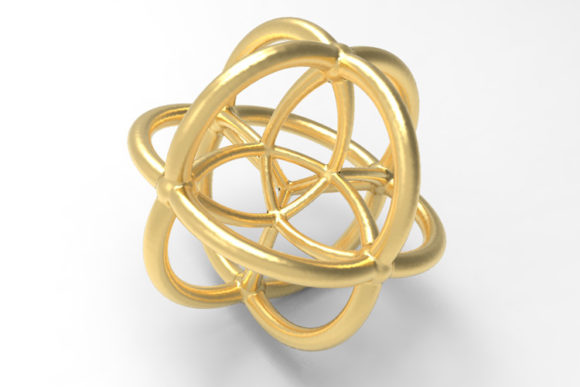
The 4D Coxeter Bead Model for 3D Printing represents a fascinating intersection of mathematics, design, and manufacturing. At its core, this model is derived from the study of 4-dimensional polytopes—geometric figures that extend beyond our familiar three-dimensional space. These structures, first explored by mathematician Harold Scott MacDonald Coxeter, reveal symmetrical patterns that can be projected into lower dimensions, making them accessible for physical creation through 3D printing.
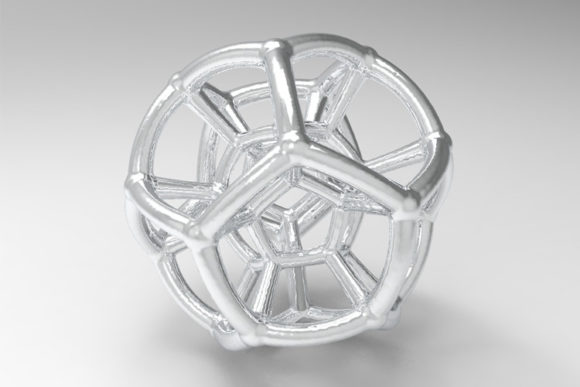
When applied to bead design, the Coxeter model transforms abstract mathematical concepts into tangible, wearable art. The bead’s surface is a projection of a 4D polytope, often simplified into a 3D mesh that retains the intricate symmetry and elegance of its higher-dimensional counterpart. This makes the model not only visually striking but also intellectually stimulating for those interested in geometry, topology, and mathematical visualization.
Why the 4D Coxeter Bead Model Appeals to Diverse Audiences
The 4D Coxeter Bead Model for 3D Printing bridges the gap between theoretical mathematics and practical design, appealing to a wide range of users:
- Mathematicians and Researchers: These professionals appreciate the model as a physical representation of complex geometric structures, allowing them to visualize and share multidimensional concepts with students and peers.
- Jewelry Designers: The bead’s symmetrical and often fractal-like surface makes it a unique and elegant addition to mathematical and scientific jewelry collections.
- Educators: Teachers can use the model to illustrate advanced geometric principles in a way that is both engaging and accessible to students.
- Hobbyists and Makers: For those who enjoy 3D printing and digital design, the Coxeter bead offers a challenging and rewarding project that combines art and science.
- Consumers: Individuals who appreciate unique, meaningful accessories often seek out jewelry that reflects their interests in science, math, or design.
Designing the 4D Coxeter Bead for 3D Printing
Creating a printable version of a 4D polytope requires careful translation of mathematical data into a 3D mesh. The process involves projecting the 4D coordinates into three dimensions using techniques such as stereographic or perspective projection. This ensures that the bead retains the essential symmetry and structure of the original polytope while remaining manufacturable.
Designers often use software like Mathematica, Blender, or specialized CAD tools to generate the final mesh. These tools allow for precise control over the bead’s dimensions, ensuring that the model is optimized for 3D printing in materials such as resin, nylon, or metal. The final preview of the model typically includes all dimensions in millimeters, enabling users to verify fit and scale before printing.
Key Design Considerations
- Resolution: Higher resolution prints better capture the fine details of the bead’s surface.
- Wall Thickness: Ensuring sufficient thickness prevents the bead from being too fragile.
- Print Orientation: Proper orientation minimizes the need for support structures and improves surface finish.
- Material Choice: Resin or high-detail plastics are ideal for capturing the intricate geometry of the bead.
Applications in Jewelry and Beyond
The 4D Coxeter Bead Model for 3D Printing has become increasingly popular in the niche market of mathematical and scientific jewelry. Its symmetrical, often mesmerizing surface patterns make it a conversation piece, appealing to both casual wearers and enthusiasts of science and art.
Designers have incorporated these beads into necklaces, earrings, and bracelets, often pairing them with minimalist settings to let the bead itself be the focal point. Some creators offer customizable versions where buyers can choose the specific polytope or adjust the scale and finish of the bead.
Beyond jewelry, the Coxeter bead model has found use in:
- Educational Kits: Schools and museums use printed models to help students grasp higher-dimensional geometry.
- Art Installations: Artists integrate these beads into larger works that explore the intersection of math and aesthetics.
- Scientific Communication: Researchers use physical models to explain complex mathematical ideas in lectures and presentations.
Advantages of Using the 4D Coxeter Bead Model
Several key advantages make the 4D Coxeter Bead Model for 3D Printing an attractive option for designers and consumers alike:
- Unique Aesthetic: Each bead is a miniature sculpture that reflects the beauty of mathematical symmetry.
- Educational Value: Wearing or displaying the bead can spark curiosity and discussion about higher-dimensional geometry.
- Customizability: The model can be adapted to various sizes and styles, making it suitable for different jewelry types and preferences.
- Technological Relevance: As 3D printing becomes more accessible, these beads represent a modern fusion of art and science.
Real-World Examples and Observations
One notable example of the 4D Coxeter Bead Model for 3D Printing in action is its use in pendant designs based on the 600-cell and 120-cell polytopes. These highly symmetric 4D shapes, when projected into 3D, result in beads with complex, interlocking geometries that are both beautiful and mathematically significant.
Designers on platforms like Shapeways and Thingiverse have shared printable versions of these beads, often accompanied by detailed descriptions of the mathematical principles behind them. Many of these models include downloadable previews with all dimensions in millimeters, allowing users to verify compatibility with their 3D printers and intended use cases.
In educational settings, professors have used printed Coxeter beads to illustrate the concept of dimensionality. By handling a physical object derived from a 4D shape, students gain a more intuitive understanding of how higher-dimensional structures can be represented in our 3D world.
Considerations for Implementation
While the 4D Coxeter Bead Model for 3D Printing offers many benefits, there are several considerations to keep in mind when implementing it in a project or product:
- Printing Complexity: Depending on the intricacy of the design, some beads may require advanced 3D printing techniques or post-processing.
- Cost: High-detail prints in premium materials can be more expensive, particularly for small-scale production.
- Scalability: If the bead is intended for mass production, designers must ensure that the model can be reliably printed at scale without loss of detail.
- Intellectual Property: Some Coxeter bead designs may be protected by licenses or require attribution, so it’s important to check usage rights before commercializing a design.
Future Trends and Innovations
As 3D printing technology continues to evolve, the potential applications of the 4D Coxeter Bead Model for 3D Printing are expanding. Innovations in multi-material printing and color 3D printing may soon allow for even more detailed and visually rich beads, incorporating gradients and textures that enhance their mathematical beauty.
We may also see increased integration of augmented reality (AR) and virtual reality (VR) tools that allow users to interact with the bead’s 4D structure before printing. This would enable a deeper understanding of the geometry and improve the design process for both creators and consumers.
Additionally, open-source communities are contributing to a growing library of Coxeter bead models, making it easier for hobbyists and educators to access and modify existing designs. This collaborative approach fosters innovation and ensures that the model remains accessible to a broad audience.
Conclusion
The 4D Coxeter Bead Model for 3D Printing is more than just a decorative object—it is a bridge between abstract mathematics and tangible design. Whether used in jewelry, education, or artistic expression, this model offers a unique way to explore and appreciate the beauty of higher-dimensional geometry. As 3D printing technology advances, the opportunities for creative and practical applications of the Coxeter bead will only continue to grow, making it a valuable asset for designers, educators, and enthusiasts alike.