Isometric Paper I KDP: A Practical Tool for 3D Design and Geometry
What Is Isometric Paper I KDP?
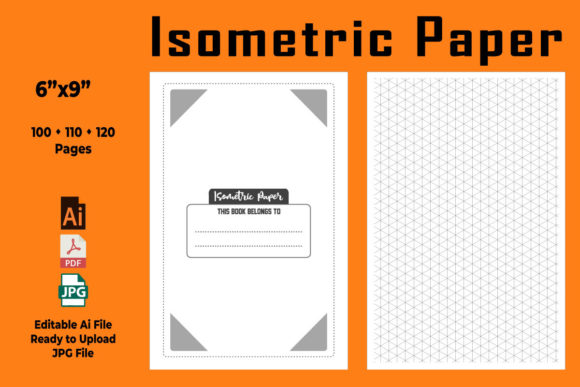
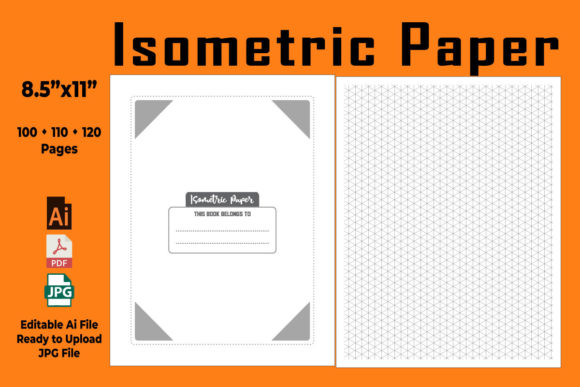
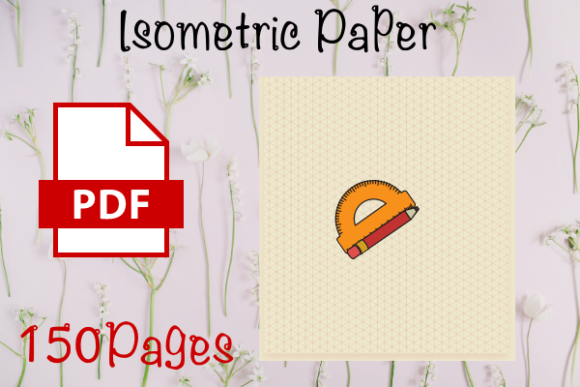
Isometric Paper I KDP is a specialized design tool printed with a grid of equilateral triangles, each measuring 0.28 inches. Designed for creators, architects, artists, and educators, this paper simplifies the process of drawing three-dimensional objects on a two-dimensional surface. The grid layout helps maintain accurate angles and proportions, making it ideal for sketching cubes, pyramids, cylinders, and more complex forms.
Each file includes a high-quality PDF with 150 pages, ready to upload for print-on-demand services like KDP. Measuring 8.5 x 11 inches and set to 300 DPI, the pages include bleed for professional printing results. Whether you're a student, teacher, or creative professional, this product is engineered to support precision and clarity in visual thinking.
Why Isometric Paper Matters in Real-World Design
Designers and builders often face the challenge of translating spatial ideas onto paper. Isometric Paper I KDP removes much of the guesswork. Because each triangle in the grid maintains a 60-degree angle, it becomes easier to draw in 3D without needing complex tools or software. This is especially helpful for:
- Architects sketching early-stage building concepts
- Landscape designers planning terrain and outdoor structures
- Product designers visualizing packaging, furniture, or gadgets
- Artists creating isometric illustrations for games or digital media
For example, a furniture designer can use this paper to quickly draft a modular shelving unit, ensuring each angle and dimension aligns correctly without the need for CAD software. Similarly, a game developer might use it to create tile-based environments that feel spatially accurate.
How Students and Educators Benefit
Many high schools and colleges now include 3D printing and spatial design in their curricula. In these settings, Isometric Paper I KDP becomes an essential tool for both teaching and learning. It supports geometry lessons by helping students visualize volume, surface area, and symmetry in three dimensions.
Teachers can use the paper to demonstrate geometric solids or assign hands-on projects that require spatial reasoning. For instance, a math class might be tasked with drawing and calculating the surface area of a hexagonal prism — a task made easier with the triangular grid. In art or design classes, students might use the paper to develop isometric drawings of imaginary cities or mechanical devices.
Because the file includes 150 pages, it's also a cost-effective solution for educators who want to provide consistent, high-quality materials without worrying about running out mid-semester.
Applications in Architecture and Urban Planning
Architects often use isometric drawing to communicate ideas before moving into digital modeling. With Isometric Paper I KDP, early-stage sketches can maintain accuracy and clarity, which is especially useful during client presentations or collaborative brainstorming sessions.
Urban planners also find value in isometric layouts when conceptualizing public spaces. For example, a planner designing a new park might use this paper to sketch pathways, seating areas, and green spaces in a way that conveys depth and scale more effectively than a flat map.
Use in Sculpture and Industrial Design
Sculptors and industrial designers often rely on isometric sketches to plan forms before moving into physical or digital prototyping. The triangular grid helps maintain consistent perspective, which is crucial when working on complex shapes or interlocking parts.
For example, a sculptor might use Isometric Paper I KDP to draft a kinetic sculpture with rotating components. The grid ensures that each element aligns correctly and rotates in a believable way. Likewise, a toy designer might use the paper to visualize how different pieces of a puzzle or building block system fit together in 3D space.
What to Consider Before Using Isometric Paper I KDP
While Isometric Paper I KDP offers many benefits, there are a few practical considerations to keep in mind:
- Drawing tools matter — Use fine-tipped pens or pencils for clean lines. Thick markers may obscure the grid.
- Digital alternatives exist — Some users may prefer digital isometric grids, especially for editing or sharing work online.
- Learning curve — If you're new to isometric drawing, it may take a few sketches to get comfortable with the grid system.
- Paper orientation — Depending on your drawing style, you may prefer rotating the paper or adjusting your hand position for comfort.
Strengths and Limitations
The biggest strength of Isometric Paper I KDP is its simplicity. It provides a consistent, accurate grid that encourages precision without the need for advanced software. Its high-quality 300 DPI print ensures clarity whether you're sketching a quick idea or preparing a formal presentation.
However, it's important to recognize its limitations. While isometric drawing is excellent for visualizing 3D forms, it doesn't account for perspective distortion, which can make objects appear less realistic in certain contexts. Additionally, users who need to create multiple views (e.g., front, top, side) may need to supplement their work with orthographic projections or other tools.
Who Should Use Isometric Paper I KDP?
This product is ideal for:
- Design students learning spatial reasoning and technical drawing
- Architecture and engineering professionals who need a portable, no-tech sketching solution
- Artists and illustrators creating isometric scenes for books, games, or websites
- DIY enthusiasts planning woodworking, 3D printing, or home improvement projects
- Educators looking for a reliable, printable resource for classroom use
If you frequently work with 3D concepts and value clarity and precision in your sketches, Isometric Paper I KDP is a versatile and accessible tool to add to your toolkit.